One morning a new show, a meme or a piece of news is nowhere to be seen. By the evening, it is all over your feeds. Online trends can rise and fall remarkably quickly — but they are not random. Understanding why topics trend helps you make sense of the conversation and separate useful information from hype.
What does “trending” actually mean?
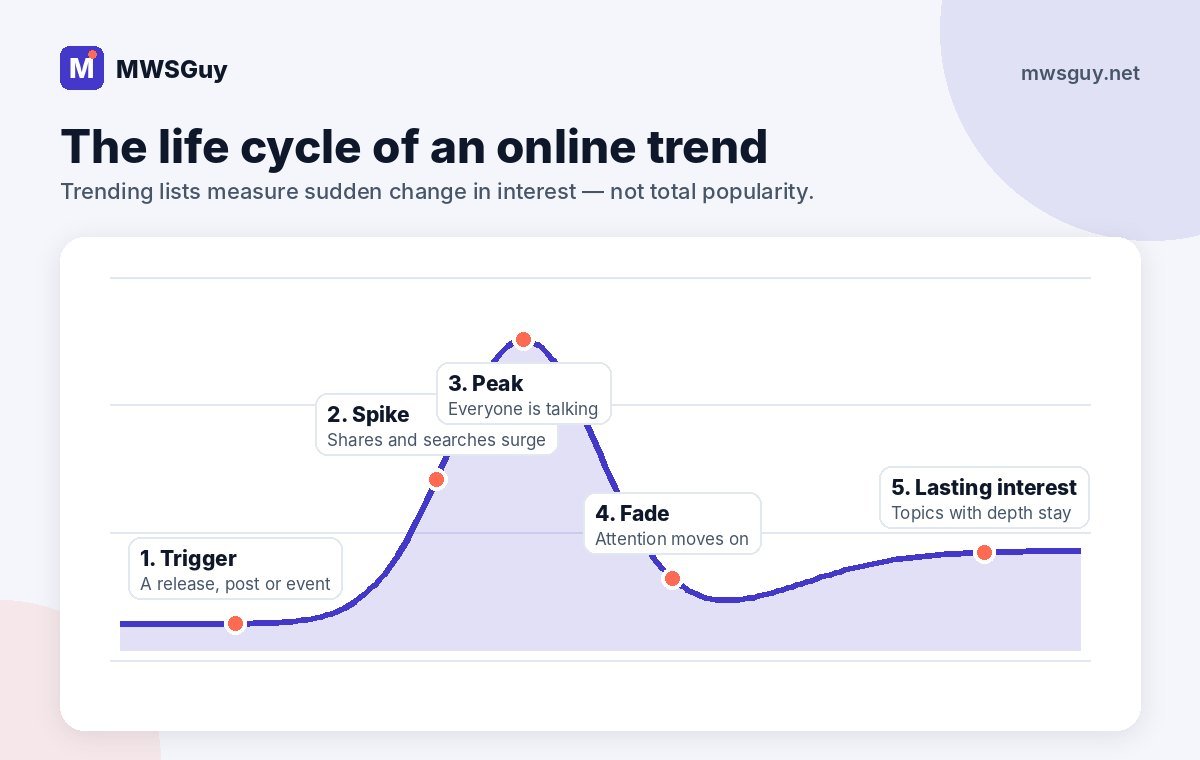
A topic is “trending” when interest in it grows unusually fast compared with its normal level. That is an important detail: trending lists usually measure sudden change, not total popularity. A small topic that jumps quickly can trend, while a very popular topic with steady interest might not.
Search engines, social networks and video platforms each calculate trends in their own way, often considering factors like the speed of growth, location and how many different people are joining the conversation.
The common ingredients of a trend

A clear trigger
Most trends start with a specific event: a new release, an announcement, a surprising moment at a live event or a widely shared post.
Emotion
Content that makes people laugh, feel surprised, inspired or even annoyed is far more likely to be shared. Emotion is one of the strongest drivers of online sharing.
Easy to join in
Trends grow when people can participate easily — by sharing an opinion, using a hashtag, recreating a format or adding their own twist.
Timing
What else is happening matters. A topic released on a quiet day may get more attention than one that competes with major news.
Amplification
When large accounts, news outlets or recommendation algorithms pick up a topic, it can reach millions of people very quickly.
Why entertainment and tech trends move so fast
New episodes, trailers, product launches and app updates create natural moments for discussion. Fans share reactions in real time, while recommendation systems show popular content to more people. This feedback loop can turn a release into a worldwide conversation within hours.
How to read a trend with a clear head
Trending does not always mean true, important or complete. Before you share or react, it helps to:
- Find the original source. Look for the first post, the official announcement or a reputable news report.
- Check the date. Old stories sometimes resurface and trend again without context.
- Look for confirmation. See whether reliable sources are reporting the same information.
- Separate facts from reactions. Many trending posts are opinions about an event, not the event itself.
- Be careful with screenshots. Images of posts or articles can be edited or taken out of context.
Tip: If a trending claim makes you feel strongly, that is a good moment to pause and verify before sharing.
Short-lived trends vs. lasting topics
Some trends disappear within a day. Others — like a hit series, an important technology change or a cultural movement — continue to matter long after the spike in attention. Lasting topics usually have real depth, ongoing developments and lots of genuine questions from the public.
At MWSGuy, we focus on trends that people want to understand, and we aim to explain why a subject matters rather than simply repeating the headline.
Frequently asked questions
Why do some topics trend even when they are not very popular?
Trending lists often measure how quickly interest grows, not total popularity. A smaller topic with a sudden spike can trend, while a big topic with steady interest may not appear.
Do trends differ by country?
Yes. Most platforms show trends by location because interests, events and languages differ around the world.
How can I avoid sharing misinformation from trending topics?
Find the original source, check the date, look for confirmation from reliable outlets and avoid sharing screenshots without context.
Final thoughts
Online trends are a mix of timing, emotion, participation and amplification. Knowing how they work helps you enjoy the conversation while staying well informed. For clear explanations of popular topics, follow our Trending section.